 08045478006
 Send Inquiry
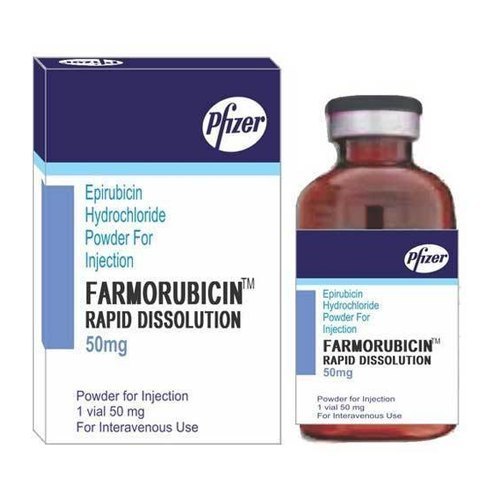
Epirubicin cancer drug
1.1 USD ($)/Bottle
Product Details:
- Dosage Form Injection
- Indication Cancer treatment including breast cancer, ovarian cancer, gastric cancer, lung cancer
- Salt Composition Epirubicin Hydrochloride
- Enzyme Types Anthracycline (Cytotoxic antibiotic)
- Feature Sterile, ready-to-use injection, broad-spectrum antitumor activity
- Ingredients Epirubicin Hydrochloride, Water for Injection, Excipients
- Application
- Click to View more
X
Epirubicin cancer drug Price And Quantity
- 10 Bottle
- 1.1 USD ($)/Bottle
- 10.00 - 100.00 USD ($)/Bottle
Epirubicin cancer drug Product Specifications
- Cancer treatment including breast cancer, ovarian cancer, gastric cancer, lung cancer
- Not applicable (synthetic origin)
- Cytotoxic, inhibits DNA and RNA synthesis
- Injection
- Red-orange, clear solution
- Epirubicin Hydrochloride, Water for Injection, Excipients
- 3.0 to 4.5
- 24 months
- Odorless
- Epirubicin Hydrochloride
- Anthracycline (Cytotoxic antibiotic)
- Sterile, ready-to-use injection, broad-spectrum antitumor activity
- Store between 2°C - 8°C, protect from light
- Use under supervision of qualified oncologist; monitor for myelosuppression and cardiotoxicity
- Yes
- Do not mix with alkaline solutions or incompatible drugs in same infusion
- 29420090
- 2 mg/ml, 10 mg/ml, 50 mg/25 ml or as specified by manufacturer
- Intravenous (IV) or Intravesical
- USP/EP/BP standards compliant
- Single-use glass vial
- 579.99 g/mol (as hydrochloride)
- C27H29NO11·HCl
Product Description
Epirubicin is used in combination with other medications to treat breast cancer in patients who have had surgery to remove the tumor. Epirubicin is in a class of medications called anthracyclines. It works by slowing or stopping the growth of cancer cells in your body.Oncology-Grade Potency and Spectrum
Epirubicin offers robust efficacy against an array of solid tumors, including breast, ovarian, gastric, and lung cancers. Its formulation as an anthracycline cytotoxic antibiotic ensures a broad antitumor spectrum. Produced under strict USP/EP/BP standards, each vial delivers a reliable, ready-to-use dose for tailored chemotherapy regimens in clinical oncology practice.
Proper Handling and Safe Administration
Administered by intravenous (IV) infusion or intravesical instillation, Epirubicin injections must be managed by qualified medical professionals. The drug is presented as a sterile, single-use glass vial in red-orange, clear solution form. Strict adherence to compatibility guidelines and monitoring protocols helps ensure patient safety and optimal therapeutic results.
Comprehensive Storage and Shelf Life Guidelines
Epirubicin Hydrochloride Injection must be stored at 2C to 8C and protected from light to preserve stability and efficacy. The shelf life of this oncology agent is 24 months. Proper handling and storage are vital to maintain the drug's pharmacological integrity and ensure patient safety during cancer treatment.
FAQ's of Epirubicin cancer drug:
Q: How should Epirubicin Injection be administered?
A: Epirubicin Injection should be administered either intravenously or intravesically depending on the specific cancer being treated and as directed by an oncologist. Administration must only be carried out by qualified healthcare professionals to ensure patient safety.Q: What cancers are treated with Epirubicin Hydrochloride?
A: Epirubicin is primarily used for the treatment of breast cancer, ovarian cancer, gastric cancer, and lung cancer. Its broad-spectrum antitumor activity also allows usage in other oncological indications as determined by a physician.Q: When should Epirubicin Injection not be mixed with other drugs?
A: Epirubicin should not be mixed with alkaline solutions or with drugs that are incompatible in the same infusion, to prevent precipitation or chemical reactions that could compromise efficacy or safety.Q: Where should Epirubicin Injection be stored?
A: The vials must be stored between 2C and 8C in a refrigerator, away from light, to maintain drug stability and effectiveness for the entire 24-month shelf life.Q: What are the benefits of using Epirubicin in cancer therapy?
A: Epirubicin provides broad-spectrum antitumor activity, making it effective against several types of cancers. Its proven efficacy, standardized formulation, and compliance with international pharmacopoeia standards contribute to successful chemotherapy outcomes.Q: Is a prescription required for Epirubicin, and who should supervise its use?
A: Yes, Epirubicin is a prescription-only medication and must be used strictly under the supervision of a qualified oncologist, with regular monitoring for potential adverse effects such as myelosuppression and cardiotoxicity.Tell us about your requirement

Price:
Quantity
Select Unit
- 50
- 100
- 200
- 250
- 500
- 1000+
Additional detail
Mobile number
Email

Other Products in 'Anti Cancer Drugs' category



YGIIS PHARMA
GST : 24AKZPP3755G1ZK
GST : 24AKZPP3755G1ZK
- B No. S- 46, Silicon Shoppers, Udhna Main Road, Surat - 394210, Gujarat, India
- Phone : 08045478006
- Mr Pranav Patel (Proprietor)
- Mobile : 08045478006
- info@ygiispharma.com
Our Products
- Anti Cancer Drugs
- Antibiotics Drugs
- Antiviral Drugs
- Antimalarial Drugs
- Anti Hypertensive & CVS Drugs
- Anti Diabetic Drugs
- Analgesic Drugs
- Dental Products
- Neutracutical Products
- Pharmaceutical Tablets
- Pharmaceutical Capsules
- Eye - Ear And Nasal Drops
- Pharmaceutical Ointment
- Dusting Powder
- Pharmaceutical Dry Syrup
- Pharmaceutical Suspension
- Pharmaceutical Cough Syrup
- Pharmaceutical Injection
- Medicinal Toothpaste
- Pharmaceutical Softgel Capsules
- Medical Diagnostic Products
- Pharmaceutical Products
- anti fungal medicine
- vaccines
- pain killer drugs
- Others
- Local Anesthesia Drugs
- Neurology and Psychotropic Drugs
 Send Inquiry
 Send SMS
YGIIS PHARMA
All Rights Reserved.(Terms of Use)
Developed and Managed by Infocom Network Private Limited.
Developed and Managed by Infocom Network Private Limited.

